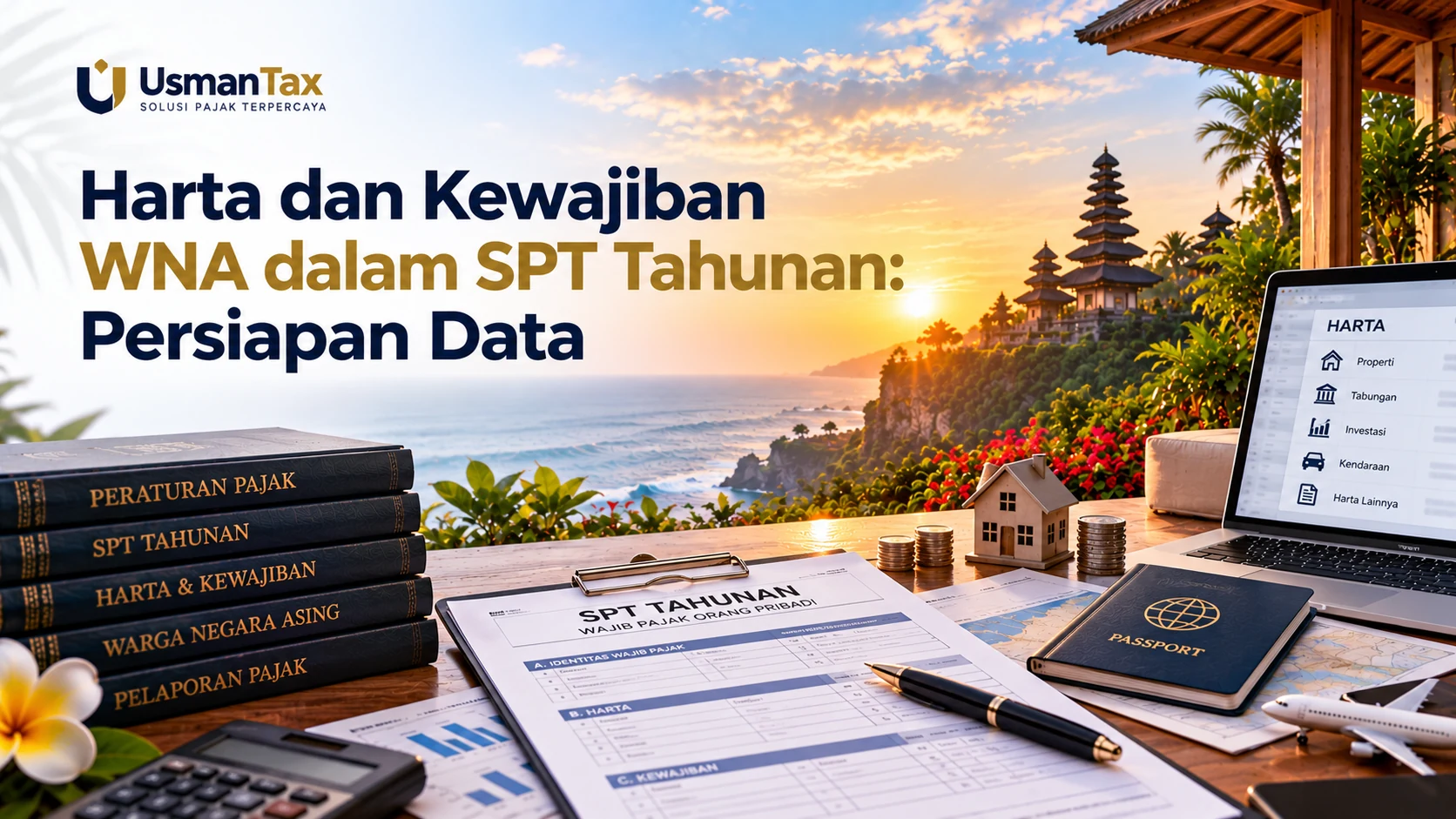
Foreign Individual Asset Reporting: Annual Return Records
Foreign individual asset reporting in an Indonesian annual tax return begins with matching ownership, supporting documents and balances at the tax year end.
Foreign individuals required to file Indonesian personal annual returns need structured asset and liability information. Main records include bank accounts, investments, property, vehicles, other assets and year end loan balances. Separate the data by owner, location, value and supporting evidence.
Preparation involves more than adding assets together. For foreign individuals with overseas accounts, shares or Bali investments, ensure each asset belongs to the correct party and is not mixed with company assets.
Foreign Individual Asset Reporting and Annual Return Liabilities
Before collecting every document, establish the individual’s tax status and filing obligations. Foreign individuals in Indonesia do not all have identical tax treatment.
Under PER-23/PJ/2025 on tax status, resident status may arise from residence in Indonesia, presence exceeding 183 days within 12 months, or presence and an intention to reside in Indonesia.
Assess status and reporting scope against each person’s facts. Once the obligation is established, begin preparing asset and debt information.
PER-11/PJ/2025 provides an individual annual return with Annex 1 covering assets and debts at year end. Read it together with PER-12/PJ/2026, which amends PER-11/PJ/2025.
This article focuses on document preparation. Reporting values and treatment of specific transactions must still follow the form instructions and each taxpayer’s circumstances.
Asset Documents to Collect
First list personal assets as at the tax year end. Use documents showing existence, ownership and value information.
A DJP article on reviewing personal assets explains the year end reference point for annual returns.
For a calendar tax year, this is generally 31 December. Adjust the review if the tax period or taxpayer’s circumstances differ.
Bank Accounts and Investments in Indonesia and Abroad
A foreign individual may hold several accounts for personal, family and investment needs. Prepare:
- Bank statements or year end balance reports.
- Bank identity and the account’s country.
- Time deposit documents and ownership evidence.
- Share, bond or other investment holding statements.
- Currency and acquisition date information.
- Records of ownership changes during the year.
In DJP guidance delivered to expatriate taxpayers, overseas assets were also discussed as part of foreign individual asset reporting.
Do not remove an account from the preparation inventory simply because it is in the individual’s home country. Examine tax status, reporting scope and ownership circumstances.
For foreign currency accounts, retain original currency amounts and the information needed to establish rupiah reporting values. Do not use one estimated rate for every asset type without checking the instructions.
Property, Vehicles and Other Valuable Assets
The next group includes land, buildings, vehicles and other valuable assets.
Preparation records may include purchase agreements, payment evidence, registration records, acquisition costs and lawful ownership documents.
For Bali property, distinguish rights or interests actually held by the individual from those held by a legal entity. A lease, right of use, company shareholding and direct asset ownership are not automatically the same asset type.
If the individual has several economic interests in property, examine the substance of each right before determining its tax reporting classification.
Prepare Foreign Individual Liability and Debt Data
Alongside assets, list loans still outstanding at year end. Loan information helps explain financing rather than presenting assets in isolation.
Useful documents include:
- Loan or credit facility agreements.
- Creditor or lender identity.
- Loan receipt date.
- Outstanding principal at year end.
- Instalment payment summaries.
- Settlement evidence for repaid loans.
- Currency information for overseas loans.
Distinguish Outstanding Debt from the Original Loan
The amount borrowed at the agreement’s outset may differ from what remains payable at year end.
For example, an individual borrows IDR 600 million and repays part of the principal. The year end review must show the remaining obligation, rather than simply the original credit facility.
Use creditor statements, repayment schedules and payment evidence to reconcile the balance. Check whether records combine principal, interest, penalties or other components requiring different analysis.
The principal schedule is a preparation component, not necessarily the final reportable debt figure. The official Annex 1 Table B instructions to PER-11/PJ/2025 include outstanding interest in debt still requiring repayment. Reconcile that component as well before finalising the reported balance.
Related Party Loans
Loans involving shareholders, family companies or related parties require additional review of debtor and creditor identities.
If the agreement names the company as borrower, do not immediately record the loan as the director’s personal debt. Conversely, trace company funds used personally through documents and entries supporting the actual transaction.
Separate Personal and Company Assets
Ownership separation is particularly important where a foreign individual operates a business or invests through a Bali company.
For example, a villa operating account may contain guest receipts, maintenance costs and supplier payments. Its balance is not necessarily the director’s or investor’s personal asset.
Likewise, distinguish the individual’s shares from assets owned by the company.
To reduce double counting:
- Identify the owner named in valid documents.
- Match funding sources, accounting entries and asset use.
- Separate personal ownership value from company operating assets.
If a personal account has been used for business, prepare a separate reconciliation. Do not classify balances solely by who receives or transfers the money.
Asset and Liability Document Matrix
Use this internal work list before reviewing the information for the annual return.
| Group | Main documents | Important checks |
|---|---|---|
| Bank accounts | Statements and balances | Owner, currency and year end position |
| Time deposits | Certificates or bank confirmation | Value, owner and acquisition date |
| Shares and investments | Portfolio statements | Units, acquisition evidence and relevant value |
| Property | Rights documents and agreements | Right type, owner and acquisition cost |
| Vehicles | Registration and purchase documents | Owner identity and acquisition year |
| Personal receivables | Agreements and payment records | Debtor identity and outstanding balance |
| Bank loans | Agreements and credit statements | Year end principal, reconciled with outstanding interest under the form instructions |
| Related party loans | Agreements and transfer evidence | Borrower and transaction substance |
This is a preparation tool, not an official code list or valuation rule for every return field.
Flag incomplete records and prioritise obtaining evidence before making final entries.
Example Review of a Foreign Individual’s Bali Records
Suppose an individual holds shares in a Bali villa management company, an Indonesian personal bank account, savings in their home country and a personal investment loan.
The review can follow this sequence.
First verify tax status and the reporting period. Second obtain year end personal account statements. Third collect share ownership and acquisition cost evidence. Fourth identify loan balances that are truly personal obligations.
Then match transactions involving the company. Company managed funds are not automatically personal assets merely because the individual is a shareholder or director.
This shows why documents should be collected before deciding return figures. Bank or company report numbers do not always represent the same personal rights and obligations.
Three Checks Before Foreign Individual Asset Reporting
- Owner: match the asset holder or debtor to supporting documents.
- Evidence: trace figures to the relevant account, agreement or ownership document.
- Year end balance: distinguish the original transaction value from the position at the reviewed period’s end.
Once collected, check consistency between documents, the previous year’s records and changes during the current year.
Look for new or sold assets, repaid debts and ownership changes. Ensure foreign currency amounts are not mixed with rupiah values without explanation.
The DJP individual annual return guide directs taxpayers to review and complete return data before submission.
Compare the asset list with funding sources and related transactions. A DJP article on asset reporting explains that disclosing assets does not automatically increase income tax payable.
Nevertheless, inconsistencies between wealth changes, income sources and financial transactions may require explanation or further tracing. Retain funding and ownership change records.
Conclusion
Preparation should begin by identifying tax obligations, inventorying personal assets, collecting year end documents and reconciling loan balances.
For foreign individuals with Bali investments or business activities, separate personal and company assets. Complete, consistent documents support review before filing and reduce ownership classification errors.
Need Help Reviewing Foreign Individual Asset and Liability Documents?
If you are a foreign individual, business owner or investor in Bali preparing personal financial documents for an annual return, discuss the required data review with Usman Tax through tax consultation.
Describe asset ownership, available documents and recording difficulties so accounting support or document review can be scoped appropriately.
To continue, read about preparing a foreign individual’s Coretax annual return so documents and next steps address the issue under discussion.
Read Also: Business Tax Administration in Bali: Accounting, Reporting and Document Controls
If transfers involve personal and company accounts, complete personal and company bank reconciliation before deciding the balances’ character.
Prepare relevant documents before discussing your needs through tax consultation services with Usman Tax.
FAQ Foreign Individual Asset Reporting
Must Every Foreign Individual in Bali Report Assets in an Indonesian Annual Return?
Nationality or presence in Bali alone cannot determine this. Examine tax status, filing obligations and the assets within scope against each person’s circumstances.
Should Overseas Bank Accounts Be Included in Preparation?
Yes. Include them in the initial inventory for review. Whether and how they appear in the return depends on taxpayer status and reporting scope.
Should Company Assets Be Reported as a Foreign Director’s Personal Assets?
Not automatically. Company assets and personal ownership differ. Examine ownership documents and transaction substance before deciding how to record them.
Is the Original Loan Amount the Year End Debt?
Prepare the obligation remaining at year end. The original loan may differ from principal after repayments, and the reporting instructions also include outstanding interest still payable. Reconcile the relevant components under the applicable form instructions.
Does Reporting More Assets Automatically Increase Tax Payable?
No. Assets describe the wealth position, while income tax is calculated under income and tax provisions. Funding sources and transactions causing wealth changes must still be explainable.
Sources and References
- Core Tax Administration Reporting Provisions — JDIH Ministry of Finance
- Reporting Amendments under PER-12/PJ/2026 — DJP
- Resident and Nonresident Tax Status Rules — DJP
- Reviewing Personal Assets at Year End — DJP
- Annual Return Education for Expatriates — DJP
- Reporting Assets in an Annual Return — DJP
- Individual Annual Return Filing Guide — DJP